
Osteopathy
A gentle, hands-on approach that considers the horse as an interconnected whole. Through observation and assessment of movement, posture, and the relationship between different body structures, osteopathy contributes to a more individualized understanding of the horse and its overall wellbeing.
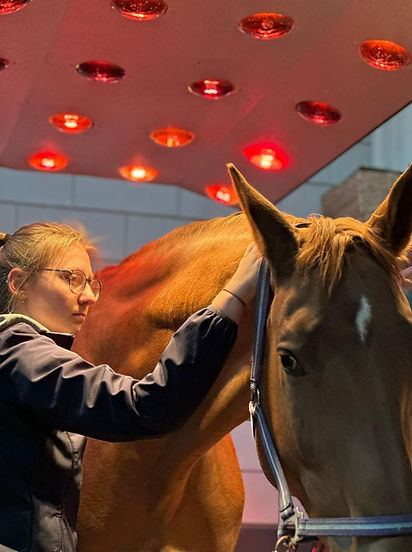
What is Osteopathy?
Everything within the body is interconnected. Muscles, joints, fascia, connective tissues, blood vessels, and organs continuously influence one another and contribute to the horse's overall movement and posture.
Osteopathy is a manual approach that focuses on observing and assessing these relationships throughout the body. Rather than looking at individual structures in isolation, osteopathy considers the horse as a whole and explores how different tissues and systems interact.
By taking a broad view of movement, posture, and structural relationships, osteopathy contributes to a more comprehensive understanding of the individual horse. This information may help guide supportive measures and complementary approaches aimed at promoting overall balance and wellbeing.
History & Origins
The foundations of osteopathy were developed in the late nineteenth century by the American physician Andrew Taylor Still. He proposed that structure and function within the body are closely connected and emphasized the importance of understanding the body as an integrated whole rather than a collection of separate parts.
Still combined the medical knowledge of his time with the belief that the body possesses natural self-regulating mechanisms. His ideas formed the basis of osteopathic principles, which continue to evolve and develop today.
While early osteopathy focused primarily on the mobility of bones and joints, modern osteopathic approaches increasingly recognize the complex relationships between muscles, fascia, ligaments, organs, connective tissues, and other structures throughout the body. This broader perspective has contributed to a more comprehensive understanding of movement, posture, and the interconnected nature of the body.
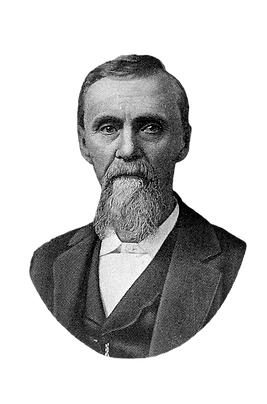
Dr. Andrew Taylor Still
How I Work with Osteopathy
At EQUINÓMAS, osteopathy is approached from the perspective of Osteopathy 2.0.
Traditional osteopathy often focuses on restoring mobility within joints and skeletal structures. While joint mobility remains important, modern understanding shows that bones do not function independently. Muscles, tendons, ligaments, fascia, organs, and connective tissues all influence one another and contribute to the body's overall movement patterns.
As Anja Marcinski explains, it is a limited view to assume that simply repositioning a joint will restore the body to its full potential. Muscles attach to bones through tendons, meaning that muscular tension can influence joint position and mobility. Looking at the body from the opposite perspective, tension within the muscles may create stress on tendons and surrounding structures, ultimately affecting movement throughout the body.
In addition, deeper structures such as organs are connected through fascial networks that can also influence posture, mobility, and comfort. For this reason, restrictions are not viewed in isolation but as part of a larger interconnected system.
This philosophy forms the foundation of Osteopathy 2.0. Rather than focusing solely on the area where tension or restriction is observed, the horse is assessed as a whole. The goal is to gain a deeper understanding of the factors contributing to compensation patterns and reduced mobility, allowing treatment to support the body in a more comprehensive way.
My approach emphasizes gentle techniques and a whole-body perspective rather than forceful manipulations. Osteopathy may be integrated with other complementary therapies such as Fascia Release, Massage, Shiatsu, or the Marcinski Soft Flow Method to support long-term balance, comfort, and overall wellbeing.